Mini forest design
How to design and protect your mini forest.
Size and shape
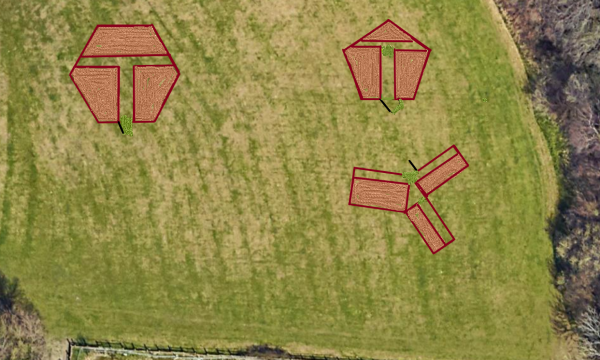
Miyawaki forests can be creative shapes with paths and seating areas for people to enjoy.
While the minimum size is about the same as a tennis court, they don't have to be rectangular. These forests can provide many social benefits, so it's important that they are welcoming and enjoyable.
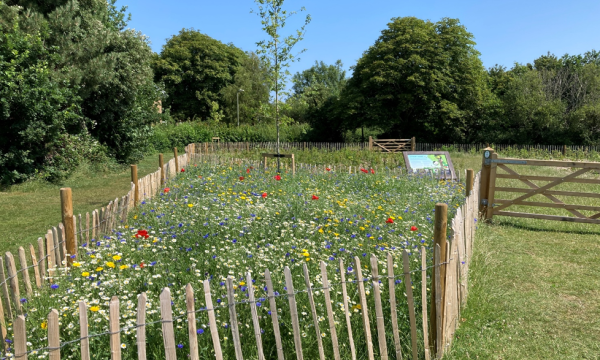
You could also add a wildflower area around the forest. It's worth thinking about this at the start of your planning so you can prepare the ground for the wildflowers and the forest at the same time.
Guiding principles
- Dense planting areas
- Planting areas must be impenetrable. There should be 3 to 5 trees per square metre. This mimics natural woodland and helps wildlife thrive. It also supports healthy soil systems. These planted areas are not meant to be walked through.
- Paths and open spaces
- Paths allow people to enjoy the forest without damaging it. You could design a route that leads to a central glade with seating, or goes straight through the forest. You could even have a path leading to a secret area. When deciding on path width, remember to allow space for trees to grow outwards as well as upwards.
- Minimum width of 4 metres
- This helps the forest feel enclosed and reduces noise from nearby roads. Once mature, you shouldn’t be able to see through the forest from the outside. If you are on a path inside the forest, you shouldn't be able to see through the trees to the outside.
When designing your forest, it's important to follow these principles, but you must also think about how it will be used. Involving your local community can help you create a space that meets local needs.
Case study
At Trosnant Schools in Havant, the children drew ideas for their mini forest. Popular features were included in the final design where possible. The children wanted more than one open area in the forest to provide a quiet space along with the main outdoor teaching area. The final design incorporated both a large central circular glade, plus two smaller offshoot glades.
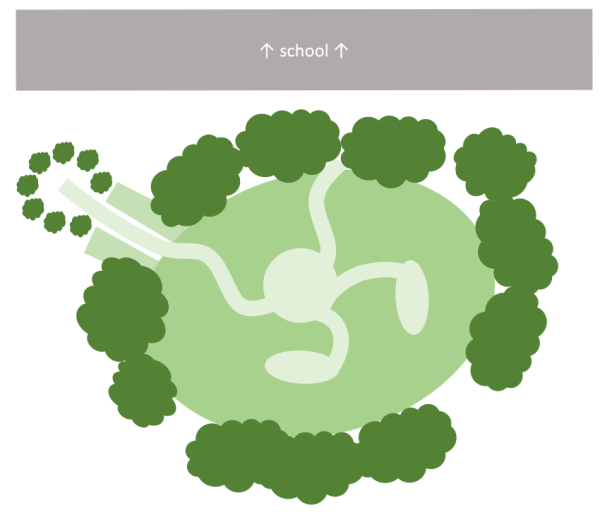
Designing the mini forest in this way meant the needs of both the children and teachers were included. This balanced health and safety with fun and effective outdoor learning.
Boundaries and protection
Young trees are vulnerable to damage from herbivores (like rabbits or deer), dogs, and people. For the first 3 to 5 years after planting, you’ll likely need to protect trees with fencing. The best type of fencing depends on what you’re protecting against.
Newly planted mini forest
Fencing options could include the following:
- Chestnut paling
- This is easy to install and looks natural. It is usually low, up to 1.2m in height. Chestnut paling is good for keeping out dogs and people, but not effective against herbivores.
- Post-and-rail
- Attractive and suitable where herbivores aren’t a problem. You can add wire mesh to keep out dogs.
- Post-and-wire mesh
- This is best for areas with rabbits or deer. It is available in a wider range of heights, but is more expensive. It is only necessary if deer are present. Don't include gates for visitors if you are trying to protect trees from deer, in case the gates are left open by mistake.
Fences should be 1.5m to 1.8m high to stop deer jumping over.
You'll need at least one gate to allow for maintenance and monitoring or if you are allowing access for visitors. The height of the gate will need to match the fence to ensure the trees are protected. If grass paths are included within the mini forest, ensure the gate is wide enough to allow a mower to access the paths.
Established mini forest
Once the forest is established, you can remove the fencing. If you want to keep a boundary, consider planting a mixed hedgerow. Mature hedges provide natural protection and are a valuable habitat in their own right. If planted outside the fence, hedge plants will need protection. Biodegradable guards around 60cm tall usually work well.
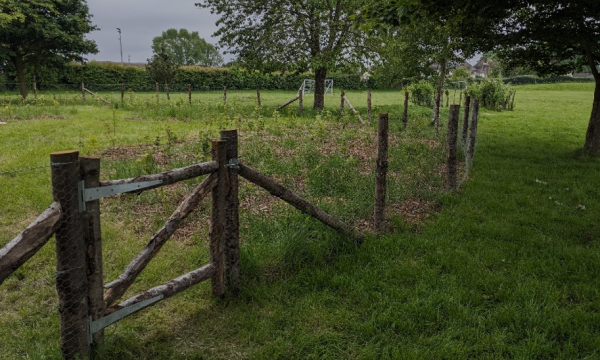
Protecting young trees from herbivores
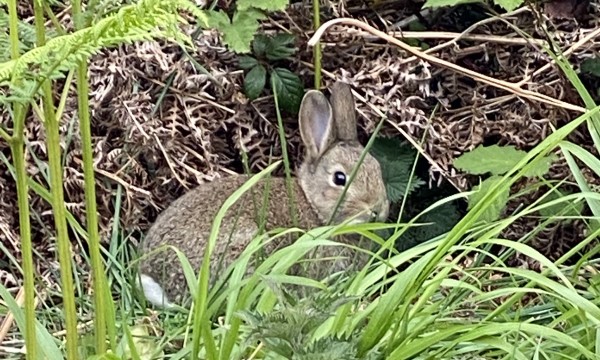
Wild animals often look for food and shelter in urban areas. Young trees are very tasty for them. Rabbits and deer are likely to cause the most damage.
Rabbits chew tree bark, which can kill the tree. Use mesh or wire fencing at least 1m high to keep them out. Choose mesh with 25mm or smaller gaps to stop rabbits from getting through. Bury it 20cm to 30cm deep or angle the bottom outward in an L-shape facing away from the fence. The L-shape should be 20cm to 30cm wide.
Deer eat new shoots and leaves, which can stunt growth. It can also make trees branch out instead of growing tall and straight. This is more of a problem for trees than for shrubs. You will need fencing to prevent deer from entering the mini forest. The height of the fence depends of the type of deer in your local area. Fences need to be 1.5m high for roe deer or 1.8m for fallow deer.