

Tree species selection guide for mini forests
How to make sure you choose the right tree for the right place.
Before planting a Miyawaki forest, it’s important to check which mix of trees are most suited to your site. A desk and site survey will help you understand which types of tree have already been found there and which of those are doing well.
When choosing tree species, it's important to:
- use a mix of at least 15 different species. More is better
- think about the conditions of your site now and in the future. Trees can live for centuries, so consider how the climate and weather might change and how that might affect your trees
- choose native species that support local wildlife
- include some trees that can handle changes in climate, even if they’re not native
- choose trees suited to the soil and the site – is the soil wet or dry, acidic or alkaline?
You can't be sure which trees will do best in the future, but current trends and research can guide you. This is why planting a wide variety of trees is so important.
Avoid pioneer and competitive species
Don’t plant pioneer or highly competitive species like silver birch, eucalyptus, aspen, black walnut or gorse. These trees can grow very quickly, even in poor soil.
When you plant a Miyawaki forest, you improve the soil with mulch and organic matter. That means pioneer species aren’t needed. They can cause problems by growing too fast and crowding out other trees, which can make the forest less diverse. Instead, choose a mix of species that suits the improved soil. This will help the forest grow into a healthy, balanced ecosystem.
Forest layers
Mature forests can be divided into different layers based on the height of the plants. Different trees and shrubs grow at different rates, so it’s important to think about what the forest will look like when all the trees are fully grown. For example, oak trees grow slowly, so they may seem small at first. Over time they will become some of the tallest trees in the forest.
The four main layers in a Miyawaki forest are:
- Canopy Layer
- These are the tallest trees, being 30 to 40 metres in height when fully grown. They catch the most sunlight and provide shade for the layers below. Different trees let in different amounts of light. Some trees, like beech, create a lot of shade. It’s important to choose a mix of trees that provides some shade but also lets enough light in for the lower layers.
- Upper Understorey
- These trees grow to about 20 to 30 metres and sit just below the canopy.
- Lower Understorey
- Smaller shrub-like plants that grow to around 10 to 20 metres.
- Shrub Layer
- The shortest woody plants, growing up to 5 to 10 metres.
There are also lower layers in woodlands, called the 'field' and 'ground' layers. These contain non-woody plants.
To create a good balance between the understorey and shrub layers, the guidelines suggest this planting mix:
- 20% canopy layer species
- 40% upper understorey species
- 30% lower understorey species
- 10% shrub layer species
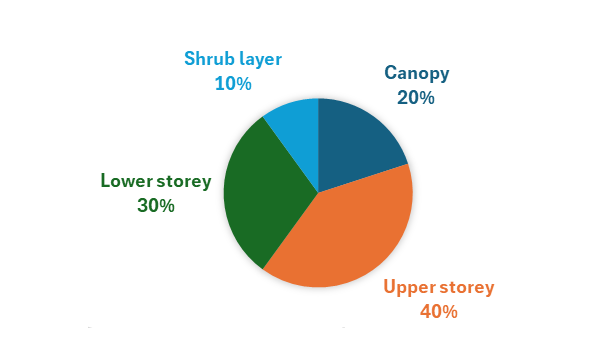
The exact mix of species in each layer should be based on local surveys and conditions. For example, two separate Miyawaki forests may both have a canopy layer made up of English oak, small-leaved lime and black poplar. The number of each type of tree may be different for each site though, based on the local situation.
In natural forests, these layers develop over time. Each one plays a role in supporting different birds, mammals, insects, mosses, lichens and fungi. It's important to get the balance right when planting a new forest from scratch.
Sourcing whips or seedlings
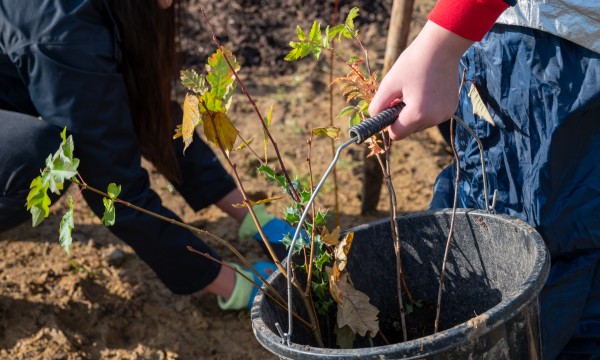
UK tree nurseries often sell a good selection of young native trees called 'whips'. These are small seedling trees, usually 1 to 2 years old and about 40 to 60cm tall. They’re usually available in winter as bare-root plants (meaning they come without soil around their roots).
Small whips are the best size of tree to plant at Miyawaki forests. The are cheaper and have a much higher root to shoot ratio than larger trees. This means they need less water and they are more likely to survive.
Why bare-root is best
Trees can be bought in a range of forms: bare-root, pot-grown, root-balled and cell-grown. There are advantages and disadvantages to each. Some are only available at certain times of the year.
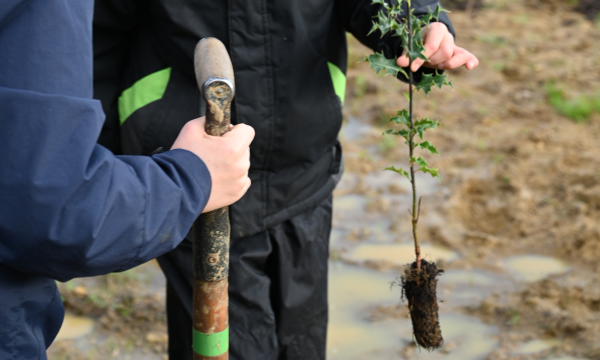
Most Miyawaki forests in the UK are likely to use bare-root whips (small seedling trees about 40 to 60cm tall). Bare-root plants are not surrounded by any soil or in a pot. This makes transporting the plants easier and they are usually more cost-effective.
Bare-root trees can only be lifted from the ground at the nursery during winter, when the plants are dormant. This reduces stress on the tree as it is not actively taking up as much water and nutrients from the soil.
Cell-grown trees
These come with a small ball or plug of soil around the roots but no pot. They can be bought at at any time of year as the roots are not disturbed when moving them. Cell-grown whips allow you to have a longer winter planting period and can be easier to plant. However, their roots may not be as well developed as bare-root trees, so they might take longer to get established.
Native UK species and biosecurity
More UK nurseries now offer native species whips. When buying trees, it’s important to think about biosecurity. This means making sure the trees don’t carry pests or diseases.
There are global policies in place to reduce the spread of pests and diseases. There are a number of UK schemes that support these policies, like the Plant Healthy scheme. Look for suppliers who follow biosecurity standards. If a supplier is not accredited with a biosecurity scheme, ask them how they make sure that their plants are biosecure.
Try to buy trees grown in the UK from UK seeds, ideally from your local area. This helps trees adapt better, reduces disease risk, and cuts down on transport emissions. If local trees aren’t available, consider setting up a local community nursery, to grow trees from local and responsibly sourced seeds.
Receiving new trees ahead of planting
Arrange delivery or collection of trees 2 to 3 days before planting. This gives you time in case of delays, but is close enough that you won’t need to store them for long.
Don't let the roots of bare-root trees dry out. Once you have your new trees, make sure you:
- keep the roots cool and damp
- sprinkle water on them if needed
- keep them tied in their delivery bags
- store them in a cool, frost-free place like a barn or garage until planting day
Cell-grown tree roots are kept damp by the compost ball surrounding them. This means you can store them for longer. Once you have your cell-grown trees, make sure you:
- open the boxes or bags to let air in
- check they look healthy
- keep them somewhere cool and frost-free
As long as the compost isn’t dry, they won’t need watering.